SEO Latest News: Keeping Up with the Evolving Landscape of Search

Search Engine Optimization (SEO) is an ever-evolving landscape, with constant updates and changes to algorithms and best practices. Staying up-to-date with the latest news in SEO is essential for anyone who wants to rank well in search results and drive traffic to their website.
Here are some of the latest SEO news and trends to keep an eye on:
Google's Page Experience update: In 2021, Google rolled out its Page Experience update, which takes into account metrics related to page loading speed, mobile responsiveness, and user experience. This update emphasizes the importance of having a fast, mobile-friendly website that provides a positive experience for users.
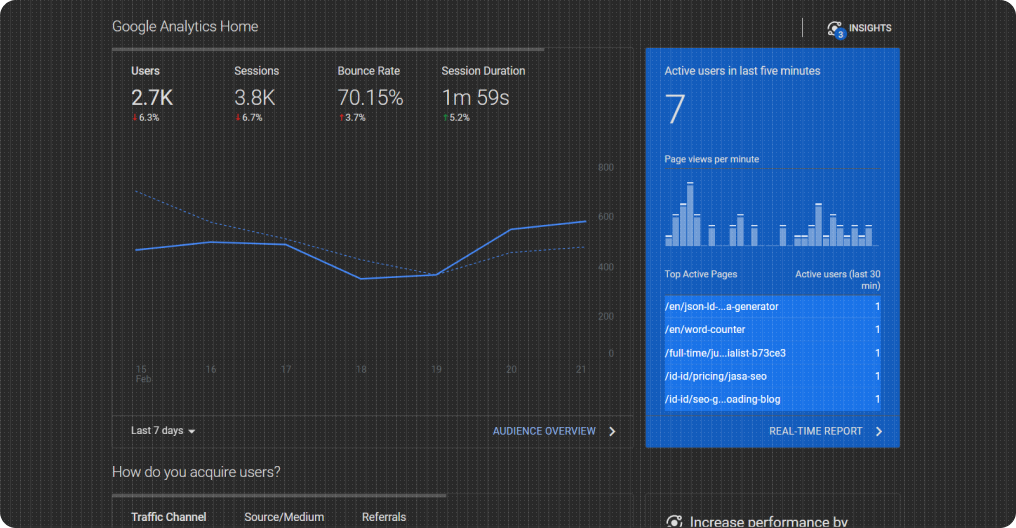
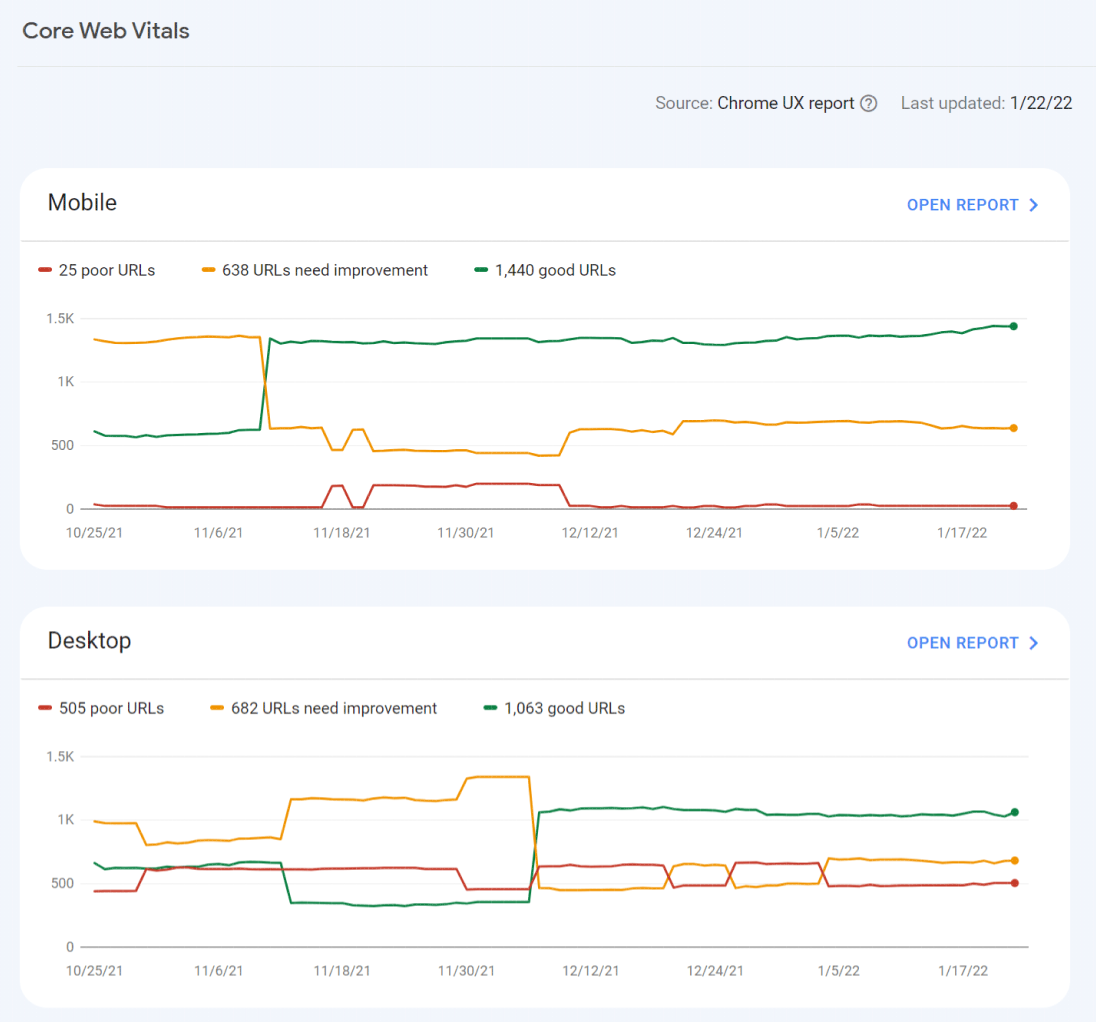
Core Web Vitals: As part of the Page Experience update, Google introduced Core Web Vitals, a set of metrics that measure loading speed, interactivity, and visual stability. These metrics are now a ranking factor, and website owners need to ensure their site meets these standards to rank well in search results.
E-A-T: Expertise, Authoritativeness, and Trustworthiness (E-A-T) have been a part of Google's guidelines for several years, but the search engine has placed more emphasis on these factors recently. To improve E-A-T, website owners need to have high-quality content written by experts in their field and showcase their expertise and authority in their industry.
Voice search: With the rise of smart speakers and virtual assistants, voice search is becoming increasingly important. Website owners should optimize their content for voice search by including conversational phrases and long-tail keywords.
Local search: As more people search for products and services in their local area, local SEO is more important than ever. Business owners should ensure their website and Google My Business profile are optimized for local search by including accurate business information and localized content.

The Chrome User Experience Report (CrUX)
The reason that the Web Vitals are slow to update, is that the field data is based on the last 28-days of data in Chrome User Experience Report (CrUX), and within that, only the 75th percentile of that data. Using 28 days worth of data, and the 75th percentiles of data are good things, in that they remove variances and extremes to give a more accurate reflection of your site’s performance without causing a lot of noise that’s difficult to interpret.
In that overly-simplistic scenario, you would get the following metrics:
| Day | LCP | 28 day Mean | 28 day p75 |
| Day 0 | 10 | 10 | 10 |
| Day 1 | 1 | 9.68 | 10 |
| Day 2 | 1 | 9.36 | 10 |
| Day 3 | 1 | 9.04 | 10 |
| …. | …. | …. | …. |
| Day 20 | 1 | 3.57 | 10 |
| Day 21 | 1 | 3.25 | 10 |
| Day 22 | 1 | 2.93 | 1 |
| Day 23 | 1 | 2.61 | 1 |
| …. | …. | …. | …. |
| Day 27 | 1 | 1.32 | 1 |
| Day 28 | 1 | 1 | 1 |
Table Caption: This is an example of 100% table look like
An In-Depth Review Of Voice Search Findings
One thing we discovered almost immediately was that 97% of answers provided by Google Assistant are results that rank in the top 10 organic results. Therefore an existing first-page ranking is nearly a prerequisite for ranking for voice search queries.
Rankings
The Android device delivered 93% of answers from the first page of organic results. However, that is still lower than Google Home and its Mini counterpart, both of which delivered 98% of answers from the first page (with over 40% being position one in Google).
| Position | Google Home Answers [%] | Google Home Mini Answers [%] | Android Phone Answers [%] | Overall [%] |
| 1 | 41.1 | 40.4 | 34.1 | 39.9 |
| 2 | 23.6 | 23.6 | 22.7 | 23.5 |
| 3 | 23.6 | 13.6 | 14.9 | 13.8 |
| 4 | 8.4 | 8.7 | 9.7 | 8.6 |
| 5 | 5.6 | 5.5 | 6.6 | 5.6 |
| 6 | 2.8 | 2.9 | 4.2 | 3.1 |
| 7 | 1.8 | 2.1 | 4.1 | 2.1 |
| 8 | 1.5 | 1.5 | 1.3 | 1.5 |
| 9 | 0.9 | 1.1 | 1.7 | 1.1 |
| 10 | 0.6 | 0.6 | 0.7 | 0.6 |
| Answer in top 10 organic results [%] | 98.1 | 97.9 | 92.7 | 97.4 |
| 100 more rows… Show more |
Table Caption: And this is an example of 120% table look like
More Rankings
{
 "@context": "https://schema.org",
 "@type": "Organization",
 "name": "Foo Software | Website Quality Monitoring",
 "url": "https://www.foo.software",
 "sameAs": [
   "https://www.facebook.com/www.foo.software",
   "https://www.instagram.com/foosoftware/",
   "https://github.com/foo-software",
   "https://www.linkedin.com/company/foo-software"
 ]
}
Website Accessibility and Performance

Search engines will surely continue to raise the bar for acceptable web standards. In 2018 Google announced the beginning of its migration to mobile-first indexing and expanded by announcing mobile-first indexing for the whole web in 2020. Web page performance and accessibility encompass user-centric metrics that can ultimately impact SEO.
Website performance captures the user journey, marking various moments of the user experience. Below are important performance metrics.
- First contentful paint (FCP): measures the time from when the page starts loading to when any part of the page's content is rendered on the screen.
- Largest contentful paint (LCP): measures the time from when the page starts loading to when the largest text block or image element is rendered on the screen.
- First input delay (FID): measures the time from when a user first interacts with your site (i.e. when they click a link, tap a button, or use a custom, JavaScript-powered control) to the time when the browser is actually able to respond to that interaction.
- Time to Interactive (TTI): measures the time from when the page starts loading to when it's visually rendered, its initial scripts (if any) have loaded, and it's capable of reliably responding to user input quickly.
- Total blocking time (TBT): measures the total amount of time between FCP and TTI where the main thread was blocked for long enough to prevent input responsiveness.
- Cumulative layout shift (CLS): measures the cumulative score of all unexpected layout shifts that occur between when the page starts loading and when its lifecycle state changes to hidden.
More Heading 3
- First contentful paint (FCP): measures the time from when the page starts loading to when any part of the page's content is rendered on the screen.
- Largest contentful paint (LCP): measures the time from when the page starts loading to when the largest text block or image element is rendered on the screen.
- First input delay (FID): measures the time from when a user first interacts with your site (i.e. when they click a link, tap a button, or use a custom, JavaScript-powered control) to the time when the browser is actually able to respond to that interaction.
Key Takeaways
- First contentful paint (FCP): measures the time from when the page starts loading to when any part of the page's content is rendered on the screen.
- Largest contentful paint (LCP): measures the time from when the page starts loading to when the largest text block or image element is rendered on the screen.
- First input delay (FID): measures the time from when a user first interacts with your site (i.e. when they click a link, tap a button, or use a custom, JavaScript-powered control) to the time when the browser is actually able to respond to that interaction.
- Time to Interactive (TTI): measures the time from when the page starts loading to when it's visually rendered, its initial scripts (if any) have loaded, and it's capable of reliably responding to user input quickly.
- Total blocking time (TBT): measures the total amount of time between FCP and TTI where the main thread was blocked for long enough to prevent input responsiveness.
- Cumulative layout shift (CLS): measures the cumulative score of all unexpected layout shifts that occur between when the page starts loading and when its lifecycle state changes to hidden.
Remember, people with and without visual impairments use keyboard navigation. Don’t add unnecessary tab to headings and paragraphs, as these can add additional challenges for some users who navigate by keyboard alone
Lorem ipsum dolor sit amet consectetur. Ac et ultricies velit ac facilisi. Tristique condimentum eu ullamcorper congue turpis eget aliquam posuere.

First contentful paint (FCP)
Measures the time from when the page starts loading to when any part of the page's content is rendered on the screen.
Cumulative layout shift (CLS)
Measures the cumulative score of all unexpected layout shifts that occur between when the page starts loading and when its lifecycle state changes to hidden.
First contentful paint (FCP)
Measures the time from when the page starts loading to when any part of the page's content is rendered on the screen.
“Content is what the search engines use to fulfill user intent”
- Someone Someone
Technical SEO can greatly impact a website’s performance on Google.
If pages on your site are not accessible to search engines, they won’t appear or rank in search results—no matter how valuable your content is.
This results in a loss of traffic to your website and potential revenue to your business.
Plus, the page speed and mobile-friendliness of a website are Google-confirmed ranking factors.
If your pages load slowly, users may get annoyed and leave your site. User behaviors like this may signal that your site doesn’t create a positive user experience. As a result, Google may not rank your site well.
“Content is what the search engines use to fulfill user intent”
- Someone Someone
For more information about cmlabs and our services, please contact us at:
E-mail :
marketing@cmlabs.coPhone : (0341) 475665
Super Admin
A design is the concept of or proposal for an object, process, or system. The word design refers to something that is or has been intentionally created by a thinking agent, and is sometimes used to refer to the inherent nature of something – its design. The verb to design expresses the process of developing a design.
Dejavu merupakan istilah yang dibuat oleh seorang psikolog bernama Emile Boirac pada tahun 1876. Dalam bahasa Prancis, deja vu artinya “pernah merasa,” atau “pernah melihat”. Dejavu adalah perasaan bahwa apa yang kita alami sekarang, pernah terjadi di masa lampau.